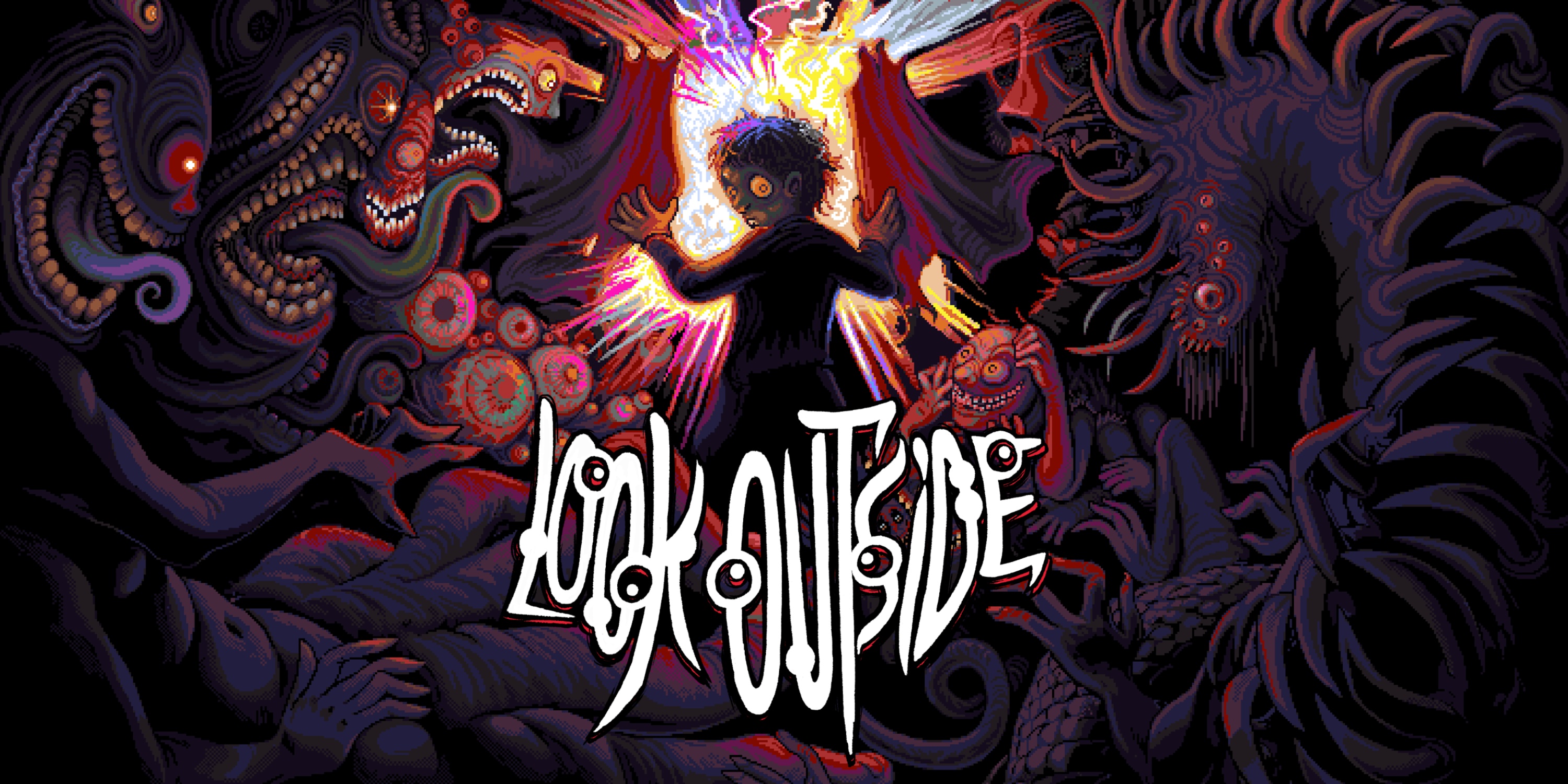
I have only played Look Outside for just over two hours. Look, I don’t handle horror very well, but that doesn’t stop me dipping my toes in it. Repeatedly. Sometimes I even beat the horror games I try, wading deeper into the murky waters and actually finding some enjoyment. The Resident Evil games, for example; I’ve become particularly fond of survival-horror. I had to stop playing Look Outside though because it freaked me the f*ck out. But the reason it had me shaking in my boots is the same reason its seemingly drab apartment building setting is so fun to explore.
You’re Scaring Yourself
A lot of the horror in Look Outside comes from agency. In fact, most of the horror in horror games comes from giving you, the player, control. It’s one thing to cringe as the protagonist walks toward the danger that you, the audience, know is there. It’s another to be forced to walk toward it yourself.
Look Outside takes this a step further by giving you a safe apartment to rest up in and relax. The thing is, you’ll be returning to the apartment frequently to manage stress levels and, more importantly, to save the game. That means stepping out the door and back into the horrors that await.
What’s so scary about stepping out of the door?
Well, I’d say that’s the hardest part.
Like leaving a safe room in Resident Evil, stepping out of the apartment in Look Outside asks: “are you ready for what’s out there?” If you’re anything like me, the answer to that question is almost always a resounding “no.” But I want to beat the game, so I step out anyway.
For me, this is a double-edged sword. The safe room provides a much-needed rest from the horror, but willingly going back is always hard. And the further I go from the safe room, the scarier the game typically becomes.
In the case of Look Outside, this made me suspicious of every NPC, every corridor, every room. Everything was a threat that could result in the loss of progress. Suddenly, I was doubting every interaction for fear of death. This made the turns of horror all the scarier; interacting with what at first seems harmless, stepping into a room that at first glance seems safe, only to find out that — in fact — you were wrong, is far more terrifying than seeing a chainsaw-wielding maniac and then being chased by that chainsaw-wielding maniac.
Resident Evil 4 didn’t really scare me. And of the five entries in that franchise that I’ve played to completion, the fourth is my least favourite.
“But you said you don’t handle horror well?” You might ask. And you’d be right. But, ironically, this is one of my favourite parts of horror games. In fact, the common ‘safe room’ that permeates through most survival-horror games is probably why I enjoy the genre so much. Having a place to go back to, take stock, and ready yourself for the next excursion makes whatever horror that’s outside easier to deal with: “I’ll just explore a little further… Then I can go back and save my game.”
Only One Place is Truly Safe
The original Resident Evil blends this masterfully. After a bit of exploration you typically know what’s lurking around specific corners, but you never know what’s behind certain locked doors, or down hallways that you haven’t explored because there’s some other danger in the way that you’re not yet willing to face. Slowly, you build a mental picture of the mansion in your head; where you’re willing to go, where’s safe, where is dangerous, and where there are unsolved problems. And I should note that this happens completely naturally, it’s built into the game’s structure.
Look Outside does this as well, but I’d hazard that the reason I couldn’t stomach it where I could with Resident Evil is that Look Outside only has one save point: the apartment. As far as I’m aware, you can’t save anywhere else. For me, that makes the experience less accessible.
That’s not to say this is a “bad” design decision. Look Outside is a horror game. I scare easily. You might not find it very scary at all! But stepping further and further away from home made the game increasingly difficult for me to play; because I was getting further from safety, the game got scarier.
With Resident Evil, I could plan my route to the next save point. The scariest moments in that game, for me, came when I didn’t know where my next save point would be, and I had already strayed far from the closest known safe room.
But by employing only one safe room in Look Outside, the developer created what is perhaps the perfect ‘difficulty’ curve for a horror game. More accurately, we could call this a ‘horror’ curve.
This is because progress is directly tied to your distance from the safe room.
To beat the game, you have to repeatedly venture further and further from the place you call home. And I haven’t even spoken at all about the actual horrors in this game.
Whether or not you’re going to actually enjoy Look Outside’s expeditions is going to depend entirely on how well you can deal with this ‘horror curve.’ But it’s worth a try.